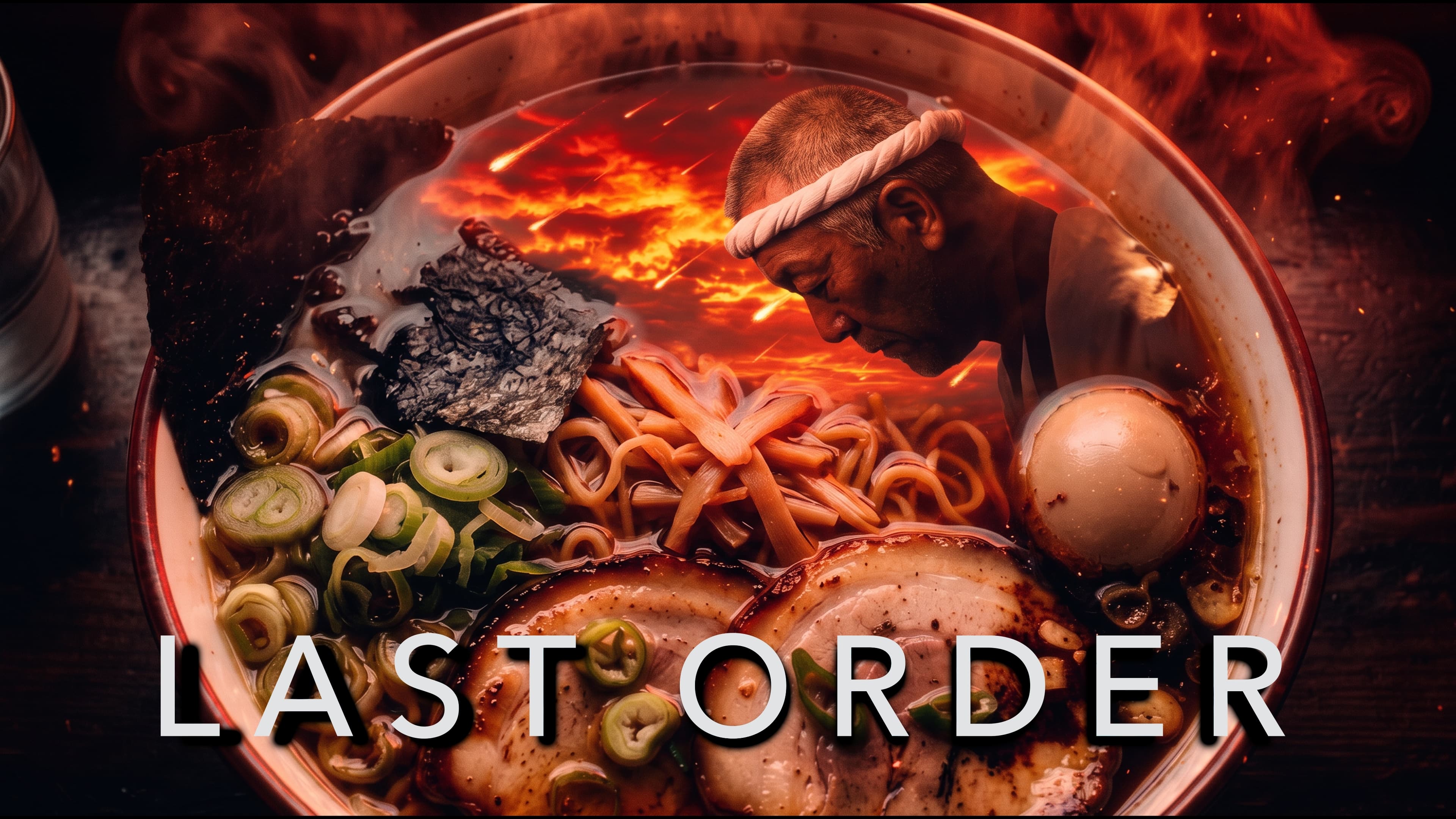
LAST ORDER
by YUSUKE ISHIKAWA
Synopsis
Tokyo. A back-street ramen shop, late at night. An old master moves through the rituals of his trade — the stock, the knife, the noodles. On a television nobody is watching, a news ticker runs. The alert arrives. A meteor will strike in four minutes. From that moment the film runs in real time: the running time is the time left. Outside, the street empties in panic. The master looks at the screen once, turns the flame up, and hangs his noren back out. Open for business. Against the crowd running one way, a young woman runs the other — into the shop. One shoe is missing. She says nothing. She holds up one finger. One bowl. He cooks it properly. He argues with the noodles over ten seconds of firmness while the sky turns red. The power fails; he lights the counter with a kitchen torch and keeps going. The building shakes; he steadies the bowl with one hand without looking up. He sets it down. "Omachi." Here you go. She eats. She cries. He serves himself a bowl and eats beside her, across the counter. The roar of the ending world thins out and disappears, until there is nothing left but eating and breathing. Light floods the window. The screen goes white. In the white, a voice: "Gochisousama." Thank you for the meal. LAST ORDER is about dignity through craft, and about what a person chooses to stay connected to when everything else comes apart. Outside, the world dissolves into signal, alarm and noise. Inside, two strangers are held together by one bowl of food and a set of gestures older than any of it. It is built as a sound film. Almost wordless, two spoken lines, and a mix in which the delicate foreground of a kitchen is set in counterpoint against the collapse of everything behind it.
Discover more films




Become a partner of the festival!
mk2agency@mk2.com